
Compliance8 min read
Load Boards vs. Dispatch vs. Brokers: What Actually Costs You More
You're bleeding hours on load boards. Or you're paying a dispatcher a cut of every load and wondering if it's worth it. Or you're waiting for a broker to finally call you directly. Stack a dispatch fee on top of factoring and a board subscription, and your "cheap" sourcing method can quietly eat a big chunk of your gross before you even pay for fuel. Here's the real math behind each option, including one most comparisons skip.
By the HHL dispatch desk ·
Topic
Carrier Costs
Reading time
8 min read
Paywall
None
Last updated
Sep 2026
Best for
Owner-operators & small fleets
Last updated 14 September 2026
What’s the Real Difference Between These Four Options?
Most carriers only think about three ways to find freight: load boards, dispatch services, and direct brokers. There’s a fourth option worth putting on the table — hiring your own in-house dispatcher. Each one works differently, costs differently, and fits a different stage of your business.
A load board is a marketplace. You pay a subscription, and you do all the searching yourself.
A dispatch service works for you under your own authority. Legally, this falls under the “bona fide agent” language in 49 CFR 371.2, not broker authority. That’s an important distinction. A broker holds separate FMCSA broker authority and contracts with the shipper. A dispatcher works for you, and the rate confirmation sits between you and the broker.
A direct broker relationship costs nothing in subscription fees, but it takes months of clean, on-time hauling to earn.
An in-house dispatcher is simply an employee who sources and negotiates freight full-time, paid a salary instead of a fee per load.
Here’s the short version of what each one costs and who’s doing the work:
| Option | What You Pay For | Who Negotiates | Best Fit |
| Load board | A monthly subscription | You, load by load | Confident negotiators with time to search |
| Dispatch service | A fee per load or a flat rate | Your dispatcher | Drivers who want freight handled for them |
| Direct broker | No subscription — you pay in time earning trust | You, from an existing relationship | Carriers with a clean track record |
| In-house dispatcher | A salary | Your employee | Growing fleets with multiple trucks |
How Each Option Actually Works Day to Day
On a load board, you search, call, and negotiate every load yourself. With a dispatch service, loads come to you already vetted, and your dispatcher handles the rate conversation. This is closer to how Highway Heroes Logistics works — dispatchers negotiate directly with brokers across all seven equipment types we book so you spend less time on the phone and more time driving.
With a direct broker, you’re negotiating too, but from a position of trust you’ve already built. With in-house dispatch, you’re managing an employee instead of a vendor.
The Stacked-Fee Problem Nobody Talks About
Here’s what most comparisons miss. Carriers rarely use just one of these tools. Many run a dispatch service and a factoring company at the same time, and both take a cut of the same load.
A dispatch fee and a factoring fee both come off the same invoice. Layer one on top of the other, and you’re looking at two cuts of the same dollar, before fuel, before your truck payment, before anything else.
This math changes depending on your weekly gross. The lower your revenue, the harder a stacked fee structure hits your take-home pay. It’s worth running your own numbers through the load profit calculator before you sign anything.
Why This Matters More for New Authorities
A new carrier is more likely to need factoring, because payment terms from brokers often run 30 days or longer. If you’re also paying a dispatch fee during that same stretch, cash flow gets tight fast. Ask any dispatch company upfront how their fee interacts with factoring, and get it in writing. Highway Heroes Logistics can walk you through that math directly, and you can see exactly what our fee covers before you ever reach out.
When Does In-House Dispatch Make Sense?
For a single truck, hiring your own dispatcher rarely makes sense. A full-time salary spread across one truck’s revenue is almost always more expensive than working with an established dispatch team.
The math flips once you’re running multiple trucks. A dispatcher’s salary stays roughly fixed no matter how many trucks they manage, but a per-load fee grows every time you add a truck. At some point, usually once a fleet grows past a few trucks, an in-house hire can start costing less per truck.
This is also the stage where a lot of carriers move from a side hustle into a real trucking company. If you want to work out exactly where that line sits for your own truck, we’ve laid out the honest math on booking your own freight versus paying for dispatch. A dispatch partner with dispatchers who already know your lanes, like the team at Highway Heroes Logistics, can carry you through that growth phase before an in-house hire makes financial sense.
How AI Load-Matching Is Changing the Math
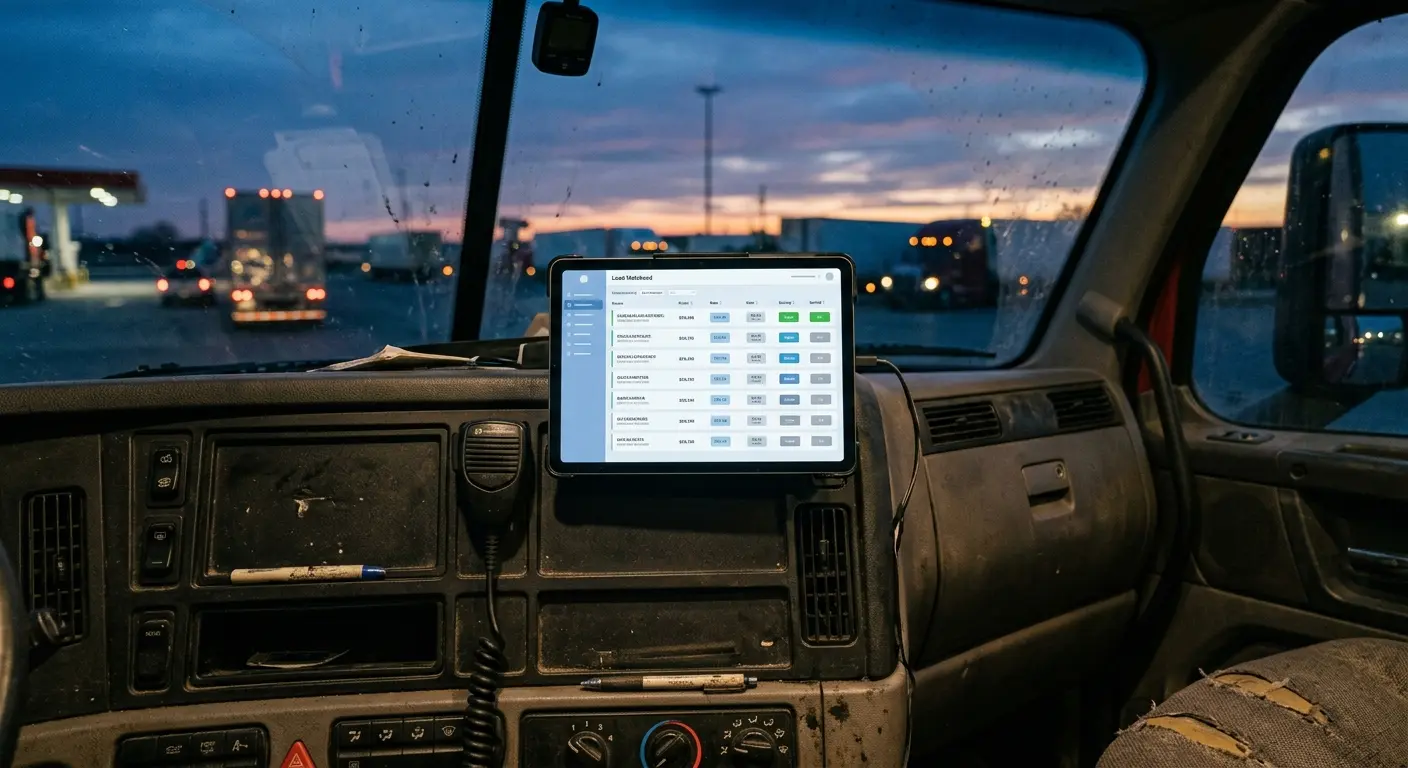
Load boards used to mean hours of scrolling and cold calls. That’s changing fast. Tools that pull loads from multiple boards into one dashboard and rank them by rate, route, and equipment fit are shrinking the gap between a load board and a human dispatcher.
These tools are good at speed. They can surface a matching load in seconds. What they still can’t do is negotiate detention pay, plan around your home time, or build the kind of broker relationship that gets you called before a load ever hits the board.
Think of AI matching as a faster load board, not a replacement for a dispatcher. It’s a tool, not a strategy on its own. It works best paired with dispatchers who still handle the relationship and the negotiation side of the job.
What AI Still Can’t Replace
An algorithm can rank loads by rate per mile. It can’t read a broker’s tone on a call, catch a red flag in a rate confirmation, or talk you through a breakdown at 2 a.m. That’s still a human job, and it’s the part of dispatch that actually protects your revenue.
What Brokers Actually Check Before Calling You Direct
Direct broker relationships are the cheapest option on paper. No subscription, no percentage fee. But brokers don’t hand these out. You earn them.
Before a broker calls you instead of posting a load, they check a few things first:
- On-time delivery. A late load costs the broker their customer, so this matters more than almost anything else.
- Insurance that’s never lapsed. A gap in coverage is often an automatic disqualifier.
- A clean safety record. Brokers can check your authority status and inspection history through FMCSA’s SAFER Company Snapshot.
- Consistency on the same lanes. Running a lane once is a load. Running it every week is a relationship.
If your authority is new, this list can feel impossible to check off. That’s normal. Every carrier starts at zero, and a dispatch service that already has broker relationships can get you moving while you build your own history.
Vetting Red Flags — Load Boards vs. Dispatch Services
Not every load board post or dispatch service is trustworthy. The warning signs look different depending on where the freight is coming from.
Red Flags on a Load Board Watch for a broker with no bond history or a low credit score. If a broker’s information looks thin or hard to verify, treat that as a reason to slow down, not a reason to skip the check.
Red Flags With a Dispatch Service A dispatch service should always show you the rate confirmation for every load they book. If they won’t tell you which broker or MC number is attached to a load, that’s not a paperwork delay. That’s a sign something is being hidden.
This is also how double brokering happens. A load gets booked, then quietly reassigned to a different carrier without your knowledge, and the original carrier chases payment that was never coming. A dispatcher who won’t share paperwork upfront is a dispatcher worth walking away from. See how booking and confirmation actually works with our team for more on what that process should look like.
Cost Per Mile Is the Real Scoreboard, Not the Sourcing Method
Here’s something that gets lost in every load board vs. dispatch vs. broker debate: none of it matters if you don’t know your own cost per mile.
The American Transportation Research Institute tracks this every year in its Operational Costs of Trucking report, and the industry’s average marginal cost has climbed above $2 per mile once fuel is included. That’s not your number. Your truck payment, insurance, and maintenance history will move it up or down. Run your own break-even number here — it’s a useful gut check either way. If a load doesn’t clear your actual cost per mile, it doesn’t matter how it landed on your plate.
Watch for Deadhead Eating Your Rate
This is also where deadhead miles quietly wreck a good-looking rate. A load posted at $3.00 a loaded mile isn’t actually a $3.00 load once you count the empty miles on either side of it. The rate on paper is per loaded mile. Your cost is per total mile, because empty miles still burn fuel.
Whether your freight comes from a board, a dispatcher, or a broker, the real question is the same: what’s your revenue per total mile, not per loaded mile?
Which Combination Fits Your Operation
There’s no single right answer here. The right mix depends on where you are right now.
New authority, no track record yet. A dispatch service that already works with brokers willing to onboard new carriers is usually the fastest path to steady freight. A load board works as a backup while you build history.
One truck, established for a year or more. This is where a load board subscription and a dispatch service often work side by side. The dispatcher sources most of your freight, and the board lets you check that your rates stay competitive.
Growing past two or three trucks. Direct broker relationships start paying off here, since you’ve likely built enough of a track record to get called before a load is posted. Keep the dispatch relationship going for lanes where you haven’t built contacts yet.
Four or more trucks. This is the range where in-house dispatch starts to make financial sense, as covered earlier. A salaried dispatcher managing multiple trucks often costs less per truck than a per-load fee across the same fleet.
Most established carriers don’t pick one option and stick with it forever. They shift the mix as the business grows. Hear from carriers who made that shift in their own words.
Every option on this list works for somebody. The trick is matching the option to where your business actually is, not where you wish it was. Tell the team at Highway Heroes Logistics your equipment, your lanes, and your current rate, and get an honest read on whether dispatch support would move the needle for you. Get started with carrier setup and find out.
Sources
- FMCSA — 49 CFR 371.2, definitions of broker and bona fide agent
- FMCSA — SAFER Company Snapshot, authority and safety record lookup
- American Transportation Research Institute — Operational Costs of Trucking
Want these numbers tracked for you?
Every HHL carrier gets their miles, RPM and deadhead calculated and delivered every Friday.